Trending:
BISE Peshawar result 2026 |
BISE Abbottabad Result2026 |
BISE Mardan Result2026 |
BISE Bannu Result2026 |
BISE Swat Result2026 |
BISE Malakand Result2026 |
BISE Kohat Result2026 |
BISE DI Khan Result2026
HEC Warns Public Against Fake Calls and Scams for Degree Attestation
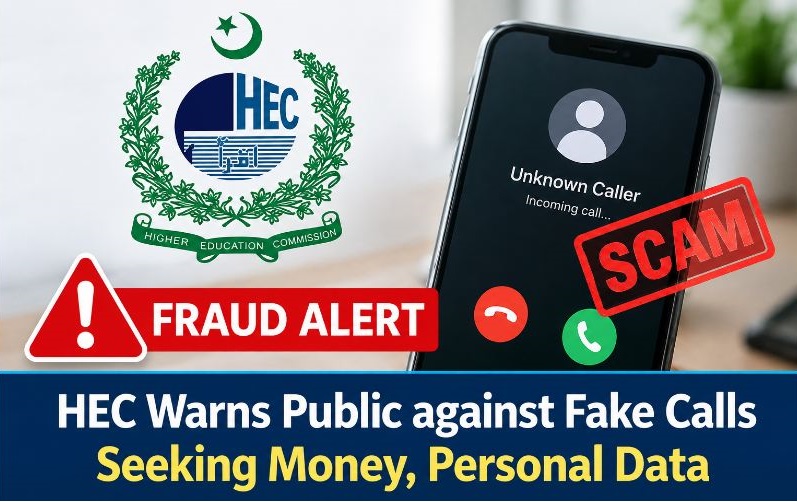
The Higher Education Commission HEC has issued a public warning about fraudulent calls and scams involving individuals who falsely claim to represent the commission. These callers may approach students, graduates and other members of the public and offer assistance with degree attestation, equivalence or verification services in exchange for money or personal information.
According to HEC, complaints have been received regarding people misusing the commission’s name to deceive citizens. The scammers may present themselves as HEC officials or authorized representatives and attempt to convince applicants that they can arrange degree-related services on their behalf.
The warning is particularly important for students and graduates who are applying for degree attestation, equivalence or related educational services. Applicants should be careful when receiving unexpected calls, messages or other communications from people claiming to be HEC representatives.
HEC has made it clear that applicants should follow the commission’s official procedures and avoid dealing with unauthorized individuals who demand payments or sensitive information over the phone.
HEC Warns Against Fraudulent Calls
The Higher Education Commission has advised the public to remain alert to suspicious phone calls in which callers claim to be associated with HEC.
Fraudsters may use the name of HEC to create a sense of trust and urgency. They may tell applicants that their degree attestation or verification is pending, that additional payment is required, or that they can speed up the process if money is transferred to them.
Such claims should not automatically be trusted.
HEC has clarified that it does not authorize individuals to contact members of the public by phone to collect payments or obtain sensitive personal information for degree attestation and related services.
Students and graduates should therefore avoid making payments to unknown callers or providing confidential information simply because the caller claims to be an HEC official.
Scammers May Target Students and Graduates
Degree attestation and equivalence are important for many graduates. Students may need attested educational documents for employment, higher education, scholarships, professional requirements, immigration-related purposes or other official matters.
Because these services can be important and time-sensitive, applicants may become vulnerable to people who promise quick solutions.
A scammer may claim to have access to an HEC office or say that they can complete the process without the applicant following the normal procedure. In some cases, the person may ask for a fee, bank information, passwords, verification codes or other personal details.
Applicants should remember that a person claiming to know an HEC official or saying that they can arrange a service does not establish that the person is actually authorized by HEC.
Any unexpected request for money or confidential information should be treated with caution.
HEC Says It Does Not Request Payments Through Phone Calls
One of the key points in the HEC warning is that applicants should not make payments to people who contact them by phone and claim to be representing the commission.
The normal application process for HEC services should be completed through the official channels and procedures specified by HEC.
If someone calls and asks an applicant to transfer money directly to a personal account, mobile wallet or another unofficial payment method for degree attestation or equivalence, the applicant should not proceed without independently verifying the request through an official HEC channel.
The same caution applies when a caller claims that a payment is required immediately to prevent cancellation or rejection of an application.
Applicants should verify the status of their application through official systems rather than relying on information provided by an unknown caller.
Do Not Share Personal Information With Unknown Callers
HEC has also warned the public against sharing sensitive information with suspicious callers.
People should be particularly careful about requests for:
- CNIC or other identity information
- Passwords
- PIN codes
- One-time passwords OTPs or verification codes
- Banking information
- Debit or credit card details
- Account login information
- Other confidential personal or financial information
A genuine-looking phone call does not mean that the person on the other end is authorized to receive such information.
Applicants should never disclose passwords or verification codes simply because a caller claims that the information is needed to verify their identity or process an application.
If a person is unsure whether a call is genuine, the safest approach is to end the call and independently contact the relevant organization through its official contact channels.
How Applicants Can Protect Themselves
Students and graduates can take several simple precautions to reduce the risk of falling victim to fraudulent calls.
Verify the Caller Independently
Do not rely solely on the callers claim that they work for HEC. If the call concerns an application, applicants should check their application through the official HEC system or contact HEC using an officially published contact method.
Applicants should not use a phone number, website address or payment information supplied only by an unknown caller.
Avoid Unofficial Payments
If someone asks for money outside the official HEC procedure, applicants should stop and verify the request before making any payment.
A callers claim that an additional amount is required for urgent processing, verification or attestation should not be accepted without confirmation from HEC.
Protect Login Credentials
Passwords, PINs and verification codes should be treated as confidential information. They should not be shared with callers or sent to unknown individuals through text messages, WhatsApp, email or other communication platforms.
Even if a caller already knows some basic information about an applicant, that does not mean the caller is authorized to obtain additional confidential details.
Check Official Information
Applicants should use HECs official website and online services for information about degree attestation, equivalence and other educational services.
The official process provides applicants with information about requirements, application procedures and other relevant instructions. Following the official process reduces the risk of dealing with unauthorized agents or scammers.
What to Do If You Receive a Suspicious HEC Call
Anyone who receives a suspicious call claiming to be from HEC should avoid sharing personal or financial information.
The callers number, the nature of the request and any other relevant details may be noted for reporting purposes. Applicants should not continue communicating with the suspected scammer simply to obtain additional information.
If the caller requests a payment or asks for sensitive information, the safest option is to end the call and verify the matter independently.
Suspicious calls can also be reported to the relevant telecom operators helpline or to the Pakistan Telecommunication Authority PTA, as advised in the warning.
Reporting suspicious activity can help authorities identify fraudulent activity and protect other members of the public.
HEC Degree Attestation Should Be Completed Through Official Procedures
Degree attestation is an important service for graduates who need official authentication of their educational documents.
Applicants should not assume that they need a private agent to complete the process. HEC provides an official system for degree attestation, and applicants should follow the instructions issued through the commissions official channels.
The online process requires applicants to provide relevant information and documents and complete the required steps according to HECs instructions.
Applicants should carefully review their information before submitting an application and should regularly check the official system for updates regarding their case.
This is particularly important because relying on an unofficial person may expose an applicant not only to financial loss but also to the risk of sharing sensitive academic or personal information.
Be Careful With People Claiming to Be HEC Agents
Applicants should also be cautious when dealing with people who describe themselves as HEC agents, consultants or representatives.
A person may use professional language, claim to have contacts inside an HEC office or provide information about degree attestation to appear genuine. However, such claims should not be treated as proof that the individual is officially authorized.
Applicants should verify any service independently before providing documents or making payments.
Original educational documents, identity information and account credentials are important personal records. They should only be provided through trusted and officially recognized channels.
Why This Warning Matters for Graduates
For many Pakistani graduates, degree attestation and equivalence can be important steps in their academic or professional careers.
A graduate may need attested documents when applying for a job, pursuing further education, applying for opportunities abroad or completing another official process. This makes applicants more likely to respond quickly when someone promises to resolve a problem with their documents.
Scammers can take advantage of this situation by creating pressure and presenting their demands as official instructions.
Applicants should therefore avoid making decisions based solely on urgency created during a phone call.
A legitimate application issue should be independently verified before the applicant takes any financial or administrative action.
What Information Should Never Be Shared Over the Phone?
Applicants should be especially careful if a caller asks for information that could be used to access an account or conduct a financial transaction.
Passwords, PINs, one-time verification codes and banking details should not be disclosed to unknown callers.
People should also be cautious about sharing copies of identity documents or other sensitive records when the purpose of the request has not been independently confirmed.
If documentation is genuinely required for an HEC application, applicants should submit it through the official application process rather than sending it to an unknown individual simply because that person claims to be an HEC representative.
What If Someone Has Already Paid a Scammer?
Anyone who believes they have transferred money to a fraudulent caller should act quickly.
The individual should preserve relevant evidence, including the callers phone number, payment information, transaction details and messages exchanged with the suspected scammer.
The incident should then be reported to the relevant authorities or service providers through their official reporting channels.
If banking or financial information has been disclosed, the affected person should also contact the relevant financial institution as soon as possible and follow its instructions for protecting the account.
Applicants should also avoid sending additional money to a scammer who claims that another payment is needed to recover the first amount.
HEC Advises Public to Remain Vigilant
The HEC warning highlights the importance of verifying information before responding to unsolicited calls about degree attestation, equivalence and verification services.
Students, graduates and other applicants should remember that scammers can use the names of government departments and public institutions to appear legitimate.
A callers knowledge of an applicants name, degree or other basic information should not be considered sufficient evidence that the caller is an authorized representative.
The safest approach is to independently verify the information through HECs official website, online services or recognized contact channels.
Frequently Asked Questions
Does HEC call applicants to demand money for degree attestation?
Applicants should be cautious of unsolicited calls claiming that HEC requires them to make a payment through the caller. HEC has warned the public about fraudulent calls in which individuals impersonate HEC representatives and demand money or personal information.
Can I share my HEC account password with an HEC representative?
No. Applicants should not share passwords with unknown callers or other unauthorized individuals. Login credentials and verification information should be kept confidential.
Should I provide an OTP or PIN if someone says they are calling from HEC?
No. A person claiming to represent HEC should not be treated as automatically authorized to receive confidential verification codes, PINs or passwords. Do not share such information with suspicious callers.
What should I do if someone calls me about my degree attestation?
Do not immediately provide personal information or make a payment. End the call if necessary and independently verify the matter through HECs official channels.
How can I report a suspicious call?
People receiving suspicious calls can report them to the relevant telecom operators helpline or the Pakistan Telecommunication Authority PTA. Applicants should also retain relevant information about the suspicious communication where possible.
Can a scammer use HECs name to appear genuine?
Yes. Fraudsters may falsely claim to represent government departments, universities or other organizations. Therefore, applicants should independently verify any request involving money or sensitive information.
Should I send my documents to someone who claims to be an HEC agent?
Applicants should not hand over sensitive documents to an unknown person merely because that individual claims to be an HEC agent or representative. Official HEC procedures and recognized channels should be used for submitting documents.
Where should I check information about degree attestation?
Applicants should obtain degree attestation information directly from HECs official website and online services rather than relying on instructions provided by unknown callers.
Final Reminder for HEC Applicants
The latest warning from HEC is a reminder that students and graduates should remain cautious when dealing with unsolicited calls about degree attestation, equivalence and verification.
People should not transfer money to unknown individuals claiming to be HEC representatives, and they should never share passwords, PINs, verification codes or sensitive financial information with suspicious callers.
Anyone who receives a questionable call should independently verify the information through official HEC channels and report suspected fraud to the appropriate authorities or telecom operator.
Following the official process and taking a few basic security precautions can help applicants protect their money, personal information and academic records from fraudulent individuals.
Add a Comment
Comments will be shown after admin approval.
Spam comments will not be approved at all.
Intermediate Result 2026
Related Educational News
- 05 Oct 2026 Edu News
- Punjab University to Inaugurate Human-Centered AI Lab
- BSEK Karachi 9th Class General Group Result 2026 Announced – Check Result Onli
- Federal Board Inter Part 1 & 2 Result Date, Time and Check Online
- BISE Rawalpindi 9th Class Result 2026 Download Gazette PDF
- BIEK Karachi Results of 12th Class Science General Group Announced
- Pearson Edexcel Results 2026 – IAL, International GCSE and Result Dates
- Edexcel IGCSE Results 2026 – Release Date, Online Result and Grade Boundaries
- Cambridge A Level Results 2026 Release Date – Result Check and Latest Update
- Cambridge O Level Results 2026 Release Date – Check Result Online
- BIEK HSSC Part-II Science Pre-Engineering Group Result 2026 Announced
- Result 2026

Matric Result 2026 Punjab
10th Class Result 2026 Punjab
9th Class Result 2026 Punjab Boards
10th Class Result Gazette 2026 Punjab
Punjab Past Papers Matric 9th 10th
Primary Results 5th & 8th Class
BISE Results Intermediate & Matric
BISE Punjab Boards
Sindh Educational Boards
KPK Examination Boards
Technical Boards
Public Service Commission
University Results Gruaduation, Masters Classes
Subscribe by Email
Subscribe by Email
Subscribe to Rss Feed


Position Holders Matric 2026
Position Holders 9th Class 2026
Position Holders Inter 2026
Position Holders 11th Class 2026