Trending:
BISE Peshawar result 2026 |
BISE Abbottabad Result2026 |
BISE Mardan Result2026 |
BISE Bannu Result2026 |
BISE Swat Result2026 |
BISE Malakand Result2026 |
BISE Kohat Result2026 |
BISE DI Khan Result2026
University of Minnesota Masters Scholarship With 30000 Annually 2026
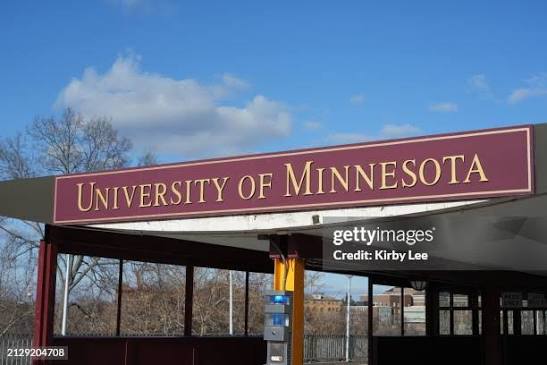
The University of Minnesota has officially announced a funded Masters research opportunity offering an University of Minnesota MSc annual scholarship of $30,000 for graduate scholars. Based at the Twin Cities campus, this graduate assistantship focuses on conservation sciences, GIS mapping, and collaborative Indigenous partnership research. Interested candidates globally, including international students, can now submit their online applications before the upcoming institutional deadline.
Securing a fully funded graduate position in the United States represents a major financial milestone for aspiring researchers. With rising tuition costs worldwide, an annual living allowance of $30,000 removes significant financial barriers for talented students aiming to advance their academic careers without heavy debt.
UMN Graduate Assistantship 2026 Research Focus and Financial Package
The newly introduced funding track is hosted within the Conservation Sciences program in partnership with the White Earth Natural Resources organization. Selected scholars will engage in participatory mapping, qualitative and quantitative data collection, and community-based environmental projects. The appointment involves at least 40 hours of research work weekly.
Financial benefits center on a base living allowance starting at $30,000 per year. Scholars gain practical experience using geographic information systems, managing local natural resources, and interacting with regional Indigenous groups. While the baseline stipend is confirmed, applicants are advised to verify complete tuition waiver details directly with program supervisors.
Steps to Apply for UMN Masters Assistantship 2026
Candidates must complete a dual-stage digital submission process to lock in their eligibility before review panels begin evaluations. Follow these step-by-step instructions:
- Review specific program requirements on the UMN Graduate School application portal.
- Contact designated research supervisors at the Umana Laboratory to align project goals.
- Prepare required academic transcripts, a detailed curriculum vitae, and three recommendation letters.
- Submit valid English proficiency test scores such as IELTS, TOEFL, or Duolingo.
- Complete and submit the online application form prior to the official deadline of November 30, 2026.
What is the UMN masters scholarship 2026 application process?
Prospective scholars begin by contacting research supervisors to confirm project alignment and funding availability. After initial contact, applicants complete their submission through the University of Minnesota Graduate School online portal, uploading transcripts, reference letters, and standard language test results before November 30, 2026.
Which degree programs qualify for University of Minnesota masters scholarship 2026?
The assistantship is tied to the Masters in Conservation Sciences degree program at the Twin Cities campus. Eligible academic backgrounds include bachelors degrees in ecology, wildlife management, anthropology, environmental science, or related technical disciplines.
Who is eligible for UMN masters scholarship 2026?
Applicants holding a relevant bachelors degree with a minimum 3.0 GPA are eligible to apply. Candidates must possess foundational GIS skills, demonstrate competence in quantitative research methods, and meet English language proficiency s like IELTS or Duolingo. Previous professional experience is not mandatory.
What funding package comes with University of Minnesota masters scholarship 2026?
Selected candidates receive a yearly living stipend of $30,000 for their 40-hour weekly research contribution. The position provides hands-on expertise in Indigenous partnership research and spatial analysis, offering a strong launchpad for higher doctoral studies or global environmental careers.
Completing this graduate program opens doors to international conservation roles, policy advisory positions, and advanced academic research across North America. Applying early ensures prospective scholars receive maximum consideration for available departmental funding.
Add a Comment
Comments will be shown after admin approval.
Spam comments will not be approved at all.
Intermediate Result 2026
Related Educational News
- 04 Nov 2026 Edu News
- 3 Ways to Check BSEK Karachi Board 9th Class Science Group Result 2026
- 3 Ways to Check BISE Lahore Board 11th Class Result 2026
- FPSC CE-2026 Viva Voce Schedule 2026 for Islamabad, Lahore and Quetta
- Karachi Board HSC-I Pre-Engineering Result 2026 Announced
- Punjab University to Inaugurate Human-Centered AI Lab
- BSEK Karachi 9th Class General Group Result 2026 Announced – Check Result Onli
- Federal Board Inter Part 1 & 2 Result Date, Time and Check Online
- BISE Rawalpindi 9th Class Result 2026 Download Gazette PDF
- BIEK Karachi Results of 12th Class Science General Group Announced
- Pearson Edexcel Results 2026 – IAL, International GCSE and Result Dates
- Result 2026

Matric Result 2026 Punjab
10th Class Result 2026 Punjab
9th Class Result 2026 Punjab Boards
10th Class Result Gazette 2026 Punjab
Punjab Past Papers Matric 9th 10th
Primary Results 5th & 8th Class
BISE Results Intermediate & Matric
BISE Punjab Boards
Sindh Educational Boards
KPK Examination Boards
Technical Boards
Public Service Commission
University Results Gruaduation, Masters Classes
Subscribe by Email
Subscribe by Email
Subscribe to Rss Feed


Position Holders Matric 2026
Position Holders 9th Class 2026
Position Holders Inter 2026
Position Holders 11th Class 2026