Trending:
BISE Peshawar result 2026 |
BISE Abbottabad Result2026 |
BISE Mardan Result2026 |
BISE Bannu Result2026 |
BISE Swat Result2026 |
BISE Malakand Result2026 |
BISE Kohat Result2026 |
BISE DI Khan Result2026
UHS Announces Major Updates to MBBS Curriculum
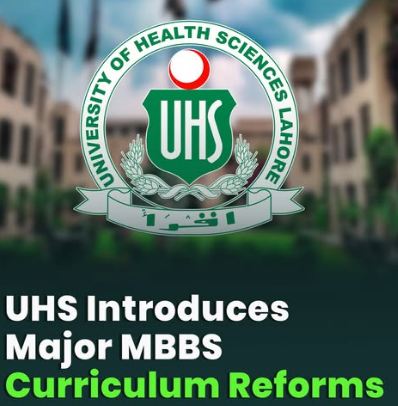
The UHS MBBS curriculum is set for a significant transformation following the 54th Board of Studies in Medicine meeting held on Wednesday. The University of Health Sciences UHS has officially approved a series of structural changes, most notably elevating the status of Paediatrics in the final year of medical training. By increasing the subject’s weightage from 200 to 300 marks, the university is bringing child health education on par with other major disciplines like Gynaecology and Obstetrics. This shift aims to better equip future doctors to handle the healthcare needs of Pakistans younger population, which constitutes a major demographic segment of the country.
This academic overhaul led by the University of Health Sciences is a direct response to the evolving healthcare priorities in the region. Vice Chancellor Ahsan Waheed Rathore emphasized that the move is not just a change in marks but a strategic realignment to improve pediatric outcomes nationwide. For medical students and faculty, this UHS latest update signals a move toward a more specialized and rigorous testing format. The introduction of MCQ-based theory papers is designed to assess clinical reasoning more effectively, ensuring that graduates possess the diagnostic precision required for high-stakes medical practice.
The table below summarizes the key changes in the medical syllabus for the current academic session:
| Subject Area | Previous Marks | New Marks | Assessment Type | Target Year |
|---|---|---|---|---|
| Paediatrics | 200 | 300 | 2 MCQ Theory Papers | Final Year |
| Community Medicine | N/A | Revised | Integrated Modules | 4th Year |
| Maternal & Child Health | Optional | Compulsory | Core Component | Clinical Years |
| Clinical Rotations | Standard | Enhanced | Field Study Visits | 4th Year |
Focus on Maternal and Child Health
A core feature of the revised medical syllabus is the mandatory inclusion of maternal and child health MCH within the Community Medicine department. The board has decided that nutrition and MCH will no longer be peripheral topics but central pillars of the fourth-year curriculum. To provide a hands-on learning experience, fourth-year MBBS students will now participate in mandatory clinical study visits to immunization centers, neonatal care units NICUs, and family planning clinics.
This practical approach ensures that the medical education in Punjab remains grounded in community needs. By exposing students to real-world primary healthcare settings earlier in their training, UHS hopes to bridge the gap between theoretical knowledge and public health implementation. These changes follow a series of recommendations from the Faculty Council and are intended to align local medical degrees with international healthcare standards, particularly those focusing on infant mortality and maternal wellness.
Examination Reforms and MCQ Testing
The MBBS examination reform also includes a change in the final year testing format for Paediatrics. The assessment will now consist of two distinct theory papers composed entirely of multiple-choice questions MCQs. This standardized testing method is intended to reduce subjectivity in marking and provide a clearer for student performance. Principals of affiliated medical colleges have been briefed on these changes to ensure that teaching methodologies are updated accordingly before the next professional exams.
UHS officials noted that the increase in marks for Paediatrics reflects the "real-world weight" of the specialty in Pakistan’s hospitals. With a high burden of pediatric infectious diseases and nutritional deficiencies in the country, the University of Health Sciences curriculum must produce physicians who are experts in neonatal and adolescent care. This reform ensures that students dedicate an appropriate amount of study time to this critical area of medicine.
Future Readiness and Professional Standards
As the 2026 academic session progresses, UHS is expected to continue its review of other clinical subjects. The current changes are seen as the first step in a broader initiative to modernize the Pakistan medical reforms landscape. By making nutrition and family planning compulsory components, UHS is addressing the root causes of many systemic health issues in Pakistan, ensuring that the next generation of doctors is equipped with a holistic understanding of social and clinical medicine.
What is Next for MBBS Students
With the new marks distribution, students are asking how to prepare for UHS Paediatrics MCQs; the university suggests focusing on clinical guidelines and the new MCQ-based theory format. Another common question is will MBBS marks change for other subjects; while Paediatrics is the focus now, other subjects are being reviewed periodically. When will the new UHS curriculum start? The changes are effective starting from the current academic year for all affiliated institutions. As these UHS professional exams approach, students must adapt their study schedules to account for the increased weightage and the new mandatory field visits.
Add a Comment
Comments will be shown after admin approval.
Spam comments will not be approved at all.
Intermediate Result 2026
Related Educational News
- 22 Oct 2026 Edu News
- 3 Ways to Check BISE Lahore Board 11th Class Result 2026
- FPSC CE-2026 Viva Voce Schedule 2026 for Islamabad, Lahore and Quetta
- Karachi Board HSC-I Pre-Engineering Result 2026 Announced
- Punjab University to Inaugurate Human-Centered AI Lab
- BSEK Karachi 9th Class General Group Result 2026 Announced – Check Result Onli
- Federal Board Inter Part 1 & 2 Result Date, Time and Check Online
- BISE Rawalpindi 9th Class Result 2026 Download Gazette PDF
- BIEK Karachi Results of 12th Class Science General Group Announced
- Pearson Edexcel Results 2026 – IAL, International GCSE and Result Dates
- Edexcel IGCSE Results 2026 – Release Date, Online Result and Grade Boundaries
- Result 2026

Matric Result 2026 Punjab
10th Class Result 2026 Punjab
9th Class Result 2026 Punjab Boards
10th Class Result Gazette 2026 Punjab
Punjab Past Papers Matric 9th 10th
Primary Results 5th & 8th Class
BISE Results Intermediate & Matric
BISE Punjab Boards
Sindh Educational Boards
KPK Examination Boards
Technical Boards
Public Service Commission
University Results Gruaduation, Masters Classes
Subscribe by Email
Subscribe by Email
Subscribe to Rss Feed


Position Holders Matric 2026
Position Holders 9th Class 2026
Position Holders Inter 2026
Position Holders 11th Class 2026