Trending:
BISE Peshawar result 2026 |
BISE Abbottabad Result2026 |
BISE Mardan Result2026 |
BISE Bannu Result2026 |
BISE Swat Result2026 |
BISE Malakand Result2026 |
BISE Kohat Result2026 |
BISE DI Khan Result2026
Sindh School Policy 2026: Early Retirement Plan Launched
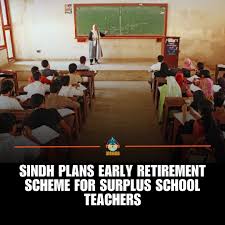
The Sindh Education Department has unveiled a strategic policy to address staffing imbalances in government schools, introducing a voluntary early retirement scheme. This "golden handshake" initiative targets surplus personnel identified through biometric verification. These administrative reforms aim to optimize resource allocation and improve the overall efficiency of the provincial public school system.
Sindh Early Retirement Policy Overview
Education Minister Sardar Shah confirmed that the department is moving toward a more streamlined workforce. By rationalizing staff levels based on actual student enrollment, the government intends to reduce budgetary burdens caused by historic over-recruitment. This policy focuses on aligning current teaching staff with the specific requirements of individual school institutions across the province.
The initiative utilizes facial recognition technology to conduct a precise verification process. Once authorities identify surplus staff, those teachers will have the option to accept the government’s voluntary retirement package. This structured approach ensures that the transition is handled ethically while addressing the long-standing challenge of excess staffing within various educational districts.
Key Reforms and Staffing Strategy
The proposed changes extend beyond the retirement package, aiming to decentralize certain administrative functions. Minister Shah announced that recruitment powers for lower-grade employees will soon be delegated to school headmasters. This shift empowers local leadership to manage support staff—such as watchmen, gardeners, and office attendants—more effectively according to daily operational needs.
These administrative adjustments are designed to foster better management at the ground level. By simplifying the hiring process for essential support roles, the department expects to see increased accountability and faster responsiveness in school maintenance. The following list details the core components of the newly proposed provincial education reforms:
- Golden Handshake Scheme: Voluntary early retirement options for surplus teaching staff.
- Biometric Verification: Use of facial recognition to accurately count students and teachers.
- Decentralized Recruitment: Empowering headmasters to hire lower-grade support personnel locally.
- Resource Rationalization: Adjusting staff density to match actual student enrollment figures.
- Budget Optimization: Reducing financial strain through the reduction of excess departmental human resources.
Implementation Timeline and Process
The government has outlined a clear path for executing these staffing adjustments. The schedule below highlights the necessary steps being taken to ensure the successful roll-out of the new education department policy:
| Phase | Description | Targeted Outcome |
|---|---|---|
| Verification | Facial recognition-based biometric audit | Data-driven identification of surplus staff |
| Policy Launch | Introduction of the voluntary golden handshake | Reduction in redundant workforce |
| Administrative Shift | Delegation of hiring to school headmasters | Improved management of lower-grade staff |
| Final Review | Assessment of staffing vs. enrollment | Optimized resource allocation per school |
Enhancing Provincial Education Standards
The Sindh Education Department is committed to transparency and efficiency through these modern administrative tools. By addressing the root causes of over-staffing, the government aims to create a more meritocratic and functional environment for both educators and students. These reforms are essential for long-term improvements in the quality of public schooling.
Authorities believe that this modernization strategy will significantly bolster the operational capacity of government institutions. As the department moves forward, the focus remains on ensuring that resources are directed toward classroom activities rather than administrative excesses. The successful implementation of these measures will set a new precedent for management in the regional education sector.
Frequently Asked Questions FAQs
What is the primary goal of the new Sindh teacher retirement scheme?
The scheme aims to address staffing imbalances and reduce the financial burden of over-recruitment by offering a voluntary golden handshake to surplus teachers.
Who will have the authority to hire lower-grade staff under the new rules?
The policy transfers the power to hire support personnel, such as watchmen and gardeners, directly to local school headmasters to improve operational efficiency.
How will the government identify surplus staff in schools?
The Education Department is utilizing a comprehensive facial recognition-based biometric verification process to compare actual student enrollment with current staffing levels across all government schools.
Add a Comment
Comments will be shown after admin approval.
Spam comments will not be approved at all.
Intermediate Result 2026
Related Educational News
- 21 Oct 2026 Edu News
- 3 Ways to Check BISE Lahore Board 11th Class Result 2026
- FPSC CE-2026 Viva Voce Schedule 2026 for Islamabad, Lahore and Quetta
- Karachi Board HSC-I Pre-Engineering Result 2026 Announced
- Punjab University to Inaugurate Human-Centered AI Lab
- BSEK Karachi 9th Class General Group Result 2026 Announced – Check Result Onli
- Federal Board Inter Part 1 & 2 Result Date, Time and Check Online
- BISE Rawalpindi 9th Class Result 2026 Download Gazette PDF
- BIEK Karachi Results of 12th Class Science General Group Announced
- Pearson Edexcel Results 2026 – IAL, International GCSE and Result Dates
- Edexcel IGCSE Results 2026 – Release Date, Online Result and Grade Boundaries
- Result 2026

Matric Result 2026 Punjab
10th Class Result 2026 Punjab
9th Class Result 2026 Punjab Boards
10th Class Result Gazette 2026 Punjab
Punjab Past Papers Matric 9th 10th
Primary Results 5th & 8th Class
BISE Results Intermediate & Matric
BISE Punjab Boards
Sindh Educational Boards
KPK Examination Boards
Technical Boards
Public Service Commission
University Results Gruaduation, Masters Classes
Subscribe by Email
Subscribe by Email
Subscribe to Rss Feed


Position Holders Matric 2026
Position Holders 9th Class 2026
Position Holders Inter 2026
Position Holders 11th Class 2026