Trending:
BISE Peshawar result 2026 |
BISE Abbottabad Result2026 |
BISE Mardan Result2026 |
BISE Bannu Result2026 |
BISE Swat Result2026 |
BISE Malakand Result2026 |
BISE Kohat Result2026 |
BISE DI Khan Result2026
Punjab College Principals and Faculty to Get Training
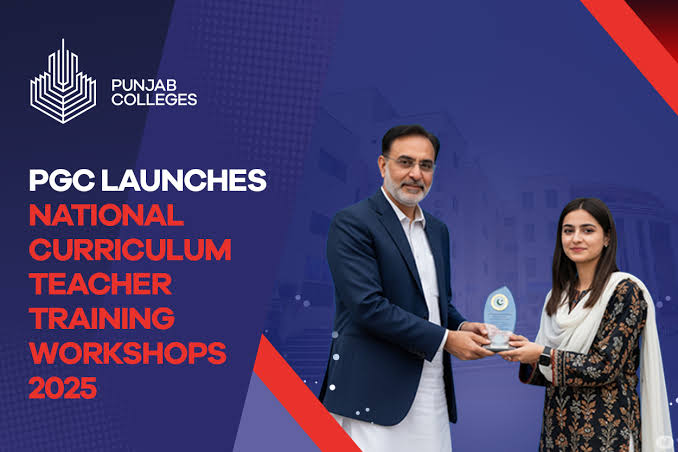
The Punjab Higher Education Department HED has announced a professional development training initiative for college leadership, teaching faculty and other staff to strengthen office management, administrative processes and institutional performance across higher education institutions in the province.
Under the Professional Development Training Programme, principals, vice principals, directors and deputy directors of colleges will receive training. The program will also cover administrative officers, clerical staff, support staff and teaching faculty. The training has been described as mandatory for the relevant stakeholders.
The initiative is part of Punjabs wider efforts to improve management, governance and professional capacity in its college system.
Punjab College Principals Training 2026
The latest announcement focuses on professional development for people working in Punjabs higher education institutions.
The Punjab Higher Education Department training program will include college leadership as well as teaching and non-teaching staff.
The officials who will receive training include:
- College principals
- Vice principals
- Directors
- Deputy directors
- Administrative officers
- Clerical staff
- Support staff
- Teaching faculty
According to the announcement, the training will provide participants with strategies for effective office management and will address ways to improve administrative processes and institutional performance.
Why Is Punjab Training College Principals and Faculty?
The main objective is to strengthen the professional capacity of people responsible for managing and teaching in Punjabs colleges.
College principals and other administrators handle a wide range of responsibilities, including institutional administration, staff management, financial matters, academic coordination and implementation of government policies.
The HEDs training initiatives therefore extend beyond classroom teaching. They also address leadership, administration and governance.
The departments existing College Leadership Development Program for Principals covers areas such as decision-making, change management, financial powers and rules, budgeting, project reporting, communication, conflict management, time management and leadership skills.
Who Will Receive Punjab College Training?
The newly announced professional development initiative covers several categories of college personnel.
College Principals
Principals are among the primary participants. Training for college heads is intended to improve their ability to manage institutions, make decisions and oversee administrative operations.
Vice Principals
Vice principals will also participate in the training. Their role in supporting college administration makes professional development relevant to day-to-day institutional management.
Directors and Deputy Directors
Directors and deputy directors are included in the training initiative as part of the broader administrative structure of Punjabs college system.
Administrative Officers
Administrative officers will receive training on relevant management and administrative responsibilities.
Clerical and Support Staff
The program does not focus exclusively on senior management. Clerical and support staff are also included.
This broader approach recognizes that effective college administration depends on coordination among different categories of employees.
Teaching Faculty
Teachers and other teaching faculty will also receive professional development under the initiative.
Faculty development can cover not only subject teaching but also institutional responsibilities, communication, administration and other professional skills.
What Will the Punjab College Training Cover?
The latest ProPakistani report identifies several broad areas of focus.
Participants will learn strategies for:
- Effective office management
- Improving administrative processes
- Strengthening institutional performance
- Understanding roles and responsibilities
- Improving governance
The exact timetable, training locations and individual course modules were not specified in the September 17 announcement.
However, HEDs established leadership-development program provides an indication of the types of professional skills addressed through its broader training framework.
College Leadership Development Program in Punjab
The College Leadership Development Program for Principals is an existing HED initiative designed to enhance the leadership capabilities of college principals.
HED lists a broad set of training topics under this program.
These include:
- Principal as a role model
- Empathy and resilience
- Self-awareness
- Community engagement
- Change management
- Decision-making
- Financial powers and rules
- Duties and functions of Drawing and Disbursing Officers
- Budgeting
- MTBF preparation
- ADP and project report writing
- PC-I, PC-II, PC-III, PC-IV and PC-V
- Character building
- Countering hatred at colleges
- Audit rules and practices
- Maintenance and reconciliation of accounts
- Asset management
- Investment of college funds
- Official communication
- Recruitment policies
- Contract appointments
- Re-employment policy
- PEEDA Act 2006
- Procurement procedures
- PPRA Rules
- Leadership skills
- Time management
- Conflict management
- Communication skills
- Critical and creative thinking
- Motivational strategies
- Stress management
These topics show that Punjabs college leadership training extends across administrative, financial, interpersonal and institutional-management responsibilities.
Focus on Office Management
One of the clearest priorities in the new announcement is office management.
Effective office management is important because colleges handle a large volume of administrative activity involving:
- Student records
- Faculty matters
- Official correspondence
- Financial documentation
- Staff administration
- Academic coordination
- Government instructions
- Institutional reporting
The new training is expected to give relevant personnel strategies for handling these responsibilities more effectively.
Improving Administrative Processes in Punjab Colleges
The training will also focus on improving administrative processes.
Administrative procedures affect almost every aspect of college operations. Better processes can help institutions organize responsibilities, communicate instructions and manage official work more systematically.
The Professional Development Training Programme is therefore broader than a conventional teacher-training course. It includes people working across different administrative and academic functions.
Institutional Performance Is Another Key Focus
The Punjab HED initiative also targets institutional performance.
College performance depends on several interconnected factors, including:
- Leadership
- Teaching quality
- Administrative efficiency
- Staff coordination
- Financial management
- Student services
- Accountability
- Compliance with government rules
Training college personnel in these areas can support the departments broader institutional-improvement objectives.
The HEDs initiatives page separately lists faculty improvement, promotion-linked training and college leadership development, and other higher-education reforms among its ongoing initiatives.
Roles and Responsibilities to Be Explained
Another stated component of the new training is awareness of roles and responsibilities.
Clearly defined responsibilities can help employees understand:
- What duties belong to their positions
- How they should coordinate with other officials
- Which administrative procedures they need to follow
- How institutional decisions are implemented
- How different levels of college administration work together
The government says this aspect of training is intended to strengthen governance in higher education institutions.
Punjab HEDs Broader Faculty Development Efforts
The new announcement fits into a longer-running focus on professional development within Punjabs higher education system.
The Higher Education Departments initiatives page lists Initiatives for Faculty Improvement as well as a Promotion-Linked Training & College Leadership Development Programme.
The department has also worked with the Higher Education Commission on professional development for college faculty.
In 2023, HEC reported that it collaborated with Punjabs Higher Education Department on a policy dialogue concerning professional development for affiliated-college faculty. The initiative included discussions on training needs, training-delivery procedures, learning-outcome evaluation and periodic review of the professional-development policy.
Training Will Include Non-Teaching Staff
An important feature of the latest announcement is that the initiative is not limited to principals and teachers.
Administrative officers, clerical staff and support staff are also included.
This creates a wider professional-development framework for college employees.
Non-teaching employees are involved in many processes that directly affect institutional operations, making their administrative skills relevant to overall college performance.
Punjab College Faculty Professional Development
For teaching faculty, professional development can help strengthen professional skills alongside subject-specific expertise.
The wider HED framework recognizes faculty improvement as an important part of higher education development.
The HEC has previously noted that affiliated colleges can face capacity and resource limitations and may need support in keeping up with developments in teaching and learning methodologies. Its collaboration with HED Punjab was intended in part to help develop a structured faculty professional-development policy.
How College Leadership Training Can Address Management Skills
The HEDs existing training framework covers several practical management skills.
Decision-Making
College heads may need to make decisions involving administration, staff, finances and institutional planning.
Change Management
Educational institutions regularly implement new policies and procedures. Change-management skills can help administrators manage such transitions.
Financial Management
HEDs existing leadership program includes financial powers, budgeting, accounts and management of college funds.
Communication
Official communication and communication skills for effective management are among the listed training topics.
Conflict Management
Conflict-management training is also included in the existing leadership-development curriculum.
Time Management
Time-management skills form another component of the HEDs leadership program.
Governance in Punjab Colleges
The latest initiative places particular emphasis on governance.
Effective governance involves clear responsibilities, appropriate decision-making, adherence to rules and effective coordination between institutional stakeholders.
The governments stated objective of increasing awareness of roles and responsibilities is directly linked to strengthening governance in colleges.
HEDs established leadership curriculum also covers areas such as audit procedures, procurement rules, financial management and official communication, all of which form part of institutional governance.
What College Principals Can Learn From the Existing HED Program
The official HED material shows that college leadership development is comprehensive.
Principals may receive training related to:
| Area | Examples of training |
|---|---|
| Leadership | Inspirational leadership, role-modeling |
| Management | Change, time and conflict management |
| Finance | Budgeting, accounts and financial powers |
| Planning | ADP and project-report writing |
| Governance | Audit, rules and institutional responsibilities |
| Procurement | PPRA Rules |
| Communication | Official and management communication |
| Human resources | Recruitment, contracts and re-employment |
| Critical thinking | Critical and creative thinking |
| Staff development | Motivation and stress management |
These topics come from HEDs published College Leadership Development Program and provide context for the departments wider professional-development approach.
Will the Training Be Mandatory?
Yes. The September 17 report states that the Professional Development Training Programme has been made mandatory for the relevant stakeholders.
The announcement includes multiple categories of college personnel rather than restricting mandatory participation to principals alone.
The exact implementation schedule and individual training batches were not provided in the report.
Is This Training Only for Principals?
No.
Although college principals, vice principals, directors and deputy directors are specifically mentioned, the initiative also includes:
- Administrative officers
- Clerical staff
- Support staff
- Teaching faculty
Therefore, the Punjab college faculty training 2026 initiative is part of a wider professional-development effort covering both academic and non-academic personnel.
What Is the Punjab Higher Education Department?
The Higher Education Department HED, Government of Punjab is responsible for various aspects of higher education administration in the province.
Its initiatives include programs related to:
- Faculty improvement
- College leadership development
- College admissions
- Scholarships
- Student enrollment
- Infrastructure
- Teaching interns
- Digital processes
- Public colleges
The departments official initiatives page lists both faculty-improvement measures and promotion-linked training and college leadership development among its programs.
What Students May Gain From Better-Trained College Staff
The latest initiative is directed at staff rather than students, but the intended focus on institutional performance has implications for college services.
Improved administrative processes can affect areas such as:
- Student support
- Academic coordination
- Record management
- Communication
- Institutional planning
- Administrative response times
- Governance
The government has specifically linked the training to improved administrative processes and institutional performance.
What Has Not Yet Been Announced?
While the broad training initiative has been announced, several operational details are not contained in the September 17 report.
These include:
- Exact training dates
- Training venues
- Batch schedules
- Number of participants per batch
- Detailed curriculum for each staff category
- Assessment method
- Certification details
- Attendance procedure
These details should be confirmed through subsequent notifications from the Punjab Higher Education Department.
Punjab College Training 2026: Key Points
The main details are:
- Department: Higher Education Department, Government of Punjab
- Program: Professional Development Training Programme
- Target group: College principals, vice principals, directors and deputy directors
- Other participants: Administrative officers, clerical staff, support staff and teaching faculty
- Mandatory: Yes, according to the September 17 announcement
- Main focus: Office management
- Additional focus: Administrative processes and institutional performance
- Governance component: Awareness of roles and responsibilities
- Wider HED context: College leadership and faculty-improvement initiatives are already part of the departments programs.
Frequently Asked Questions
Who will receive training under Punjabs new college training program?
The program covers college principals, vice principals, directors, deputy directors, administrative officers, clerical staff, support staff and teaching faculty.
Is Punjab college staff training mandatory?
The September 17, 2026 announcement says the Professional Development Training Programme has been made mandatory for the relevant stakeholders.
What is the purpose of the Punjab college principals training?
The training is intended to improve office management, administrative processes and institutional performance while increasing awareness of roles and responsibilities to strengthen governance.
Will Punjab college teachers also receive training?
Yes. Teaching faculty are included alongside principals, vice principals, directors, deputy directors and various categories of administrative and support staff.
What topics are covered in the HED College Leadership Development Program?
HEDs published program includes leadership, decision-making, change management, financial management, budgeting, audit, procurement, communication, conflict management, time management, critical thinking and other management-related subjects.
Is the new training only about teaching methods?
No. The latest announcement specifically emphasizes office management, administrative processes, institutional performance and governance. Teaching faculty are included, but the initiative covers the broader functioning of higher education institutions.
What is the role of HED Punjab in faculty development?
HED Punjab lists faculty improvement and promotion-linked training and college leadership development among its higher-education initiatives.
Has Punjab previously worked on professional development for college faculty?
Yes. HEC reported in 2023 that it worked with Punjabs Higher Education Department on a professional-development policy dialogue for affiliated-college faculty, including training-needs assessment, training procedures and evaluation of learning outcomes.
When will the Punjab college training take place?
The September 17 announcement confirms the training initiative but does not provide a detailed schedule or batch-wise dates. Those details should be confirmed through subsequent HED notifications.
What is the expected impact of the training?
The stated objectives are improved office management, stronger administrative processes, better institutional performance and greater awareness of roles and responsibilities for improved governance.
The Punjab Higher Education Department is expanding professional development across the provinces college system by bringing principals, vice principals, directors, deputy directors, teaching faculty and other staff into a mandatory training framework.
The Punjab college principals training 2026 initiative is focused on more than leadership alone. Its stated objectives include better office management, administrative processes, institutional performance and governance.
The departments existing College Leadership Development Program shows that its broader training approach also addresses decision-making, financial management, budgeting, audit, procurement, communication, conflict management and other practical leadership skills.
The exact training schedule and detailed arrangements for the newly announced program have not yet been specified in the available announcement. College staff should therefore follow official HED Punjab notifications for further implementation details.
Add a Comment
Comments will be shown after admin approval.
Spam comments will not be approved at all.
Intermediate Result 2026
Related Educational News
- 11 Oct 2026 Edu News
- FPSC CE-2026 Viva Voce Schedule 2026 for Islamabad, Lahore and Quetta
- Karachi Board HSC-I Pre-Engineering Result 2026 Announced
- Punjab University to Inaugurate Human-Centered AI Lab
- BSEK Karachi 9th Class General Group Result 2026 Announced – Check Result Onli
- Federal Board Inter Part 1 & 2 Result Date, Time and Check Online
- BISE Rawalpindi 9th Class Result 2026 Download Gazette PDF
- BIEK Karachi Results of 12th Class Science General Group Announced
- Pearson Edexcel Results 2026 – IAL, International GCSE and Result Dates
- Edexcel IGCSE Results 2026 – Release Date, Online Result and Grade Boundaries
- Cambridge A Level Results 2026 Release Date – Result Check and Latest Update
- Result 2026

Matric Result 2026 Punjab
10th Class Result 2026 Punjab
9th Class Result 2026 Punjab Boards
10th Class Result Gazette 2026 Punjab
Punjab Past Papers Matric 9th 10th
Primary Results 5th & 8th Class
BISE Results Intermediate & Matric
BISE Punjab Boards
Sindh Educational Boards
KPK Examination Boards
Technical Boards
Public Service Commission
University Results Gruaduation, Masters Classes
Subscribe by Email
Subscribe by Email
Subscribe to Rss Feed


Position Holders Matric 2026
Position Holders 9th Class 2026
Position Holders Inter 2026
Position Holders 11th Class 2026