Trending:
BISE Peshawar result 2026 |
BISE Abbottabad Result2026 |
BISE Mardan Result2026 |
BISE Bannu Result2026 |
BISE Swat Result2026 |
BISE Malakand Result2026 |
BISE Kohat Result2026 |
BISE DI Khan Result2026
HEC Releases Alarming NSCT Results for IT Graduates
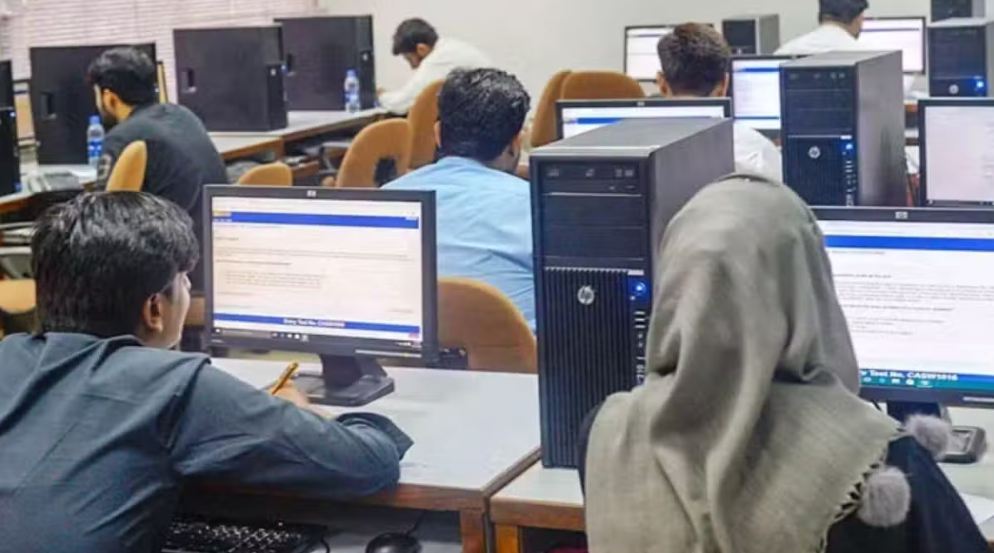
The Higher Education Commission HEC has officially published the university-wise results for the inaugural National Skills Competency Test NSCT 2026. The data reveals an alarming skill deficit among final-year computing students across Pakistan, sparking urgent discussions regarding the quality of local higher education.
The sudden release of these standardized scores has sent shockwaves through the academic community. With over 33,000 students evaluated nationwide, the outcomes expose a massive disconnect between traditional university grades and the practical capabilities required by the global technology sector.
National IT Skills Test Discloses Severe Industry Readiness Deficit
The newly published metrics highlight a severe lack of practical expertise among IT graduates. Despite maintaining high Cumulative Grade Point Averages CGPAs within their institutions, an overwhelming majority of candidates struggled to pass the industry-endorsed practical s.
The assessment, executed by the Virtual University VU of Pakistan as the primary testing body, focused heavily on "Applied Skills" rather than rote-based memorization. Industry experts note that while students possess a strong theoretical understanding of computing concepts, their ability to deploy actual code or solve real-world technical problems remains dangerously low.
Higher Education Commission Publishes University Wise Performance Metrics
In a bid to maintain absolute transparency, the Higher Education Commission Pakistan has made the complete performance breakdown available for public viewing. The structured evaluation categorized higher education institutions based on their students collective success.
The results indicate that only a small handful of elite universities met the market-readiness standards established by the Pakistan Software Houses Association P@SHA. The vast majority of public and private sector universities fell deep into the lower performance tiers, confirming long-standing fears regarding outdated academic curricula.
Broad Student Impact and Technical Skill Gaps Revealed
The diagnostic data points to specific technical subjects where local IT graduates face the steepest hurdles. The comprehensive evaluation covered ten distinct core domains critical to the digital economy:
- Problem Solving & Analytical Skills: Worth 20% of the total score, this fundamental logic section saw exceptionally low average marks, exposing gaps in algorithmic thinking.
- Core Programming Frameworks: Students faced heavy penalties due to an inability to handle basic debugging and memory management concepts in C++, Java, and Python.
- Modern Development Domains: Performance plummeted significantly in applied fields such as Web Development, Software Engineering, and Artificial Intelligence.
Strict Accountability Policy Imposed on Pakistani Universities
The HEC has confirmed that these diagnostic scores will actively shape the institutional landscape moving forward. The performance data is being integrated directly into the national ing and university ranking frameworks.
Institutions whose student bodies underperformed will face immediate downward adjustments in their upcoming national standings. Furthermore, the commission has reiterated that any university found failing to properly facilitate student registration or update its practical laboratory infrastructures will be automatically relegated below the lowest performance ranking tier.
History of the National Skills Competency Test Initiative
The HEC National IT Skills Test was launched earlier this year following direct strategic directives from the Prime Ministers office. Developed as a joint collaborative effort between the Ministry of Information Technology and Telecommunication MoITT, the Pakistan Software Export Board PSEB, NCEAC, and P@SHA, the project seeks to systematically bridge the industry-academia skill gap. The computer-based examination took place simultaneously across 165 specialized centers in 112 cities on April 4–5, 2026.
How Institutional Stakeholders Can Access the Performance Portal
University administrations, faculty members, and individual student candidates can immediately review the official statistical data by following these steps:
- Navigate directly to the official HEC announcements dashboard at www.hec.gov.pk.
- Click on the dedicated NSCT Result 2026 portal link.
- Select the institutional performance option to download the university-wise data sheets.
- Students can input their unique registration credentials to view their individual performance maps.
Key Highlights
- Total Candidates Assessed: More than 33,000 final-year computing students evaluated.
- Core Underperformance Areas: Severe technical gaps discovered in problem-solving logic and active programming.
- Ranking Repercussions: Results will directly dictate the upcoming HEC national university rankings.
- Stakeholder Coalition: Jointly backed by MoITT, HEC, PSEB, NCEAC, and P@SHA.
Frequently Asked Questions
When will the HEC National IT Skills Test results be announced?
The Higher Education Commission officially published the complete, university-wise performance data and top student rankings in June 2026.
What do the alarming NSCT results reveal about Pakistani IT graduates?
The outcomes reveal a major practical skill gap, showing that while students achieve high academic grades, their practical problem-solving and coding abilities fall short of industry requirements.
How do the national IT skills test results affect university rankings?
HEC is using these scores as a primary ing tool; underperforming institutions will be placed into lower tiers, and non-compliant universities will face placement below the lowest ranking category.
WHATS NEXT
Following the unsettling data release, HEC and P@SHA are expected to mandate comprehensive curriculum revisions for all computing programs nationwide. Top-performing individual students who successfully cleared the competency thresholds will soon receive their joint certifications and secure prioritized placement within the national IT talent pool for local and international employment. For university administrations, the next immediate step involves upgrading physical lab infrastructures and aligning semester workflows with industry-vetted applied standards before the next assessment cycle.
Add a Comment
Comments will be shown after admin approval.
Spam comments will not be approved at all.
Intermediate Result 2026
Related Educational News
- 24 Oct 2026 Edu News
- 3 Ways to Check BISE Lahore Board 11th Class Result 2026
- FPSC CE-2026 Viva Voce Schedule 2026 for Islamabad, Lahore and Quetta
- Karachi Board HSC-I Pre-Engineering Result 2026 Announced
- Punjab University to Inaugurate Human-Centered AI Lab
- BSEK Karachi 9th Class General Group Result 2026 Announced – Check Result Onli
- Federal Board Inter Part 1 & 2 Result Date, Time and Check Online
- BISE Rawalpindi 9th Class Result 2026 Download Gazette PDF
- BIEK Karachi Results of 12th Class Science General Group Announced
- Pearson Edexcel Results 2026 – IAL, International GCSE and Result Dates
- Edexcel IGCSE Results 2026 – Release Date, Online Result and Grade Boundaries
- Result 2026

Matric Result 2026 Punjab
10th Class Result 2026 Punjab
9th Class Result 2026 Punjab Boards
10th Class Result Gazette 2026 Punjab
Punjab Past Papers Matric 9th 10th
Primary Results 5th & 8th Class
BISE Results Intermediate & Matric
BISE Punjab Boards
Sindh Educational Boards
KPK Examination Boards
Technical Boards
Public Service Commission
University Results Gruaduation, Masters Classes
Subscribe by Email
Subscribe by Email
Subscribe to Rss Feed


Position Holders Matric 2026
Position Holders 9th Class 2026
Position Holders Inter 2026
Position Holders 11th Class 2026