Trending:
BISE Peshawar result 2026 |
BISE Abbottabad Result2026 |
BISE Mardan Result2026 |
BISE Bannu Result2026 |
BISE Swat Result2026 |
BISE Malakand Result2026 |
BISE Kohat Result2026 |
BISE DI Khan Result2026
Federal Government Redesigns Primary Education for Student Wellbeing
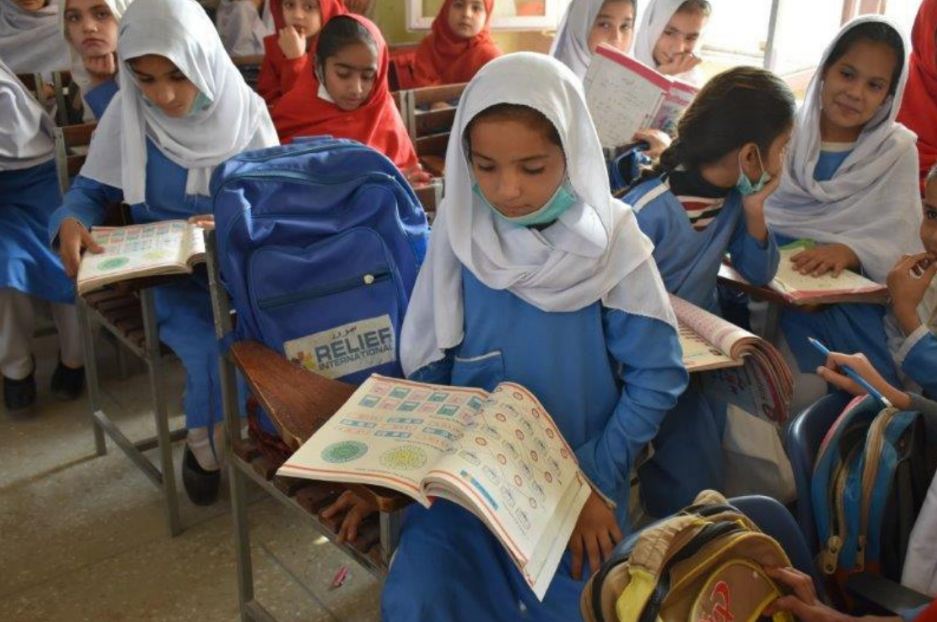
The child friendly syllabus for primary grades has been officially approved in principle by the federal government to alleviate the mental and physical burden on young students. On Wednesday, the Ministry of Federal Education and Professional Training confirmed that a new scheme of studies under the National Curriculum will target learners from nursery to grade two. This overhaul aims to replace traditional, high-pressure rote learning with engaging, activity-based instruction, ensuring that the foundational years of schooling in the federal capital and across the provinces are more holistic and less overwhelming.
This reform led by the Federal Education Ministry is a data-driven response to recent surveys showing that early-grade students in Pakistan are significantly overburdened by the current curriculum structure. By simplifying the academic load, the government is prioritizing student well-being and long-term cognitive development. For educational journalists, this move signals a progressive shift toward global pedagogical standards, where "fun learning" and practical relevance take precedence over the sheer volume of textbooks. The National Curriculum update is not just a change in subjects but a fundamental change in the national philosophy of early childhood education.
The following table summarizes the key changes and new subjects introduced in the draft:
| Grade Levels | Focus Area | New Subject Categories | Implementation Timeline |
|---|---|---|---|
| Nursery to Grade 2 | Burden Reduction | Fun Learning Activities | Next Academic Session |
| Grade 3 to 5 | Relevance & Civics | Social Sciences & Civic | Phased Rollout |
| Primary Schools | Life Skills | Financial Literacy & Safety | Integrated Modules |
| All Levels | Environment | Climate Change Awareness | 2026-2027 Session |
Reimagining Civic Education and Social Sciences
A cornerstone of the new scheme of studies is the revitalization of civic education. Under the updated framework, the government is introducing a merged subject titled "Social Sciences and Civic" to replace outdated rote-based social studies modules. This subject is designed to foster a sense of national identity, community responsibility, and ethical behavior from a young age. Federal Secretary of Education Nadeem Mahbub emphasized that the goal is to make the educational framework more effective and easier for children to grasp by connecting classroom lessons to their daily lives.
Furthermore, the curriculum will now include modern life skills that were previously absent from the public school system. Topics such as financial literacy for students and life safety skills will be integrated into the primary tiers. These additions are intended to prepare the next generation for the practical challenges of the 21st century, moving beyond academic theory to functional knowledge.
Stakeholder Collaboration and Provincial Consensus
The approval was reached during the third meeting of the technical committee, which saw representation from all federating units, including provinces and AJK. This inter-provincial collaboration is vital for the successful nationwide adoption of the child friendly syllabus. While the 18th amendment grants provinces autonomy over education, there is a clear consensus on the need for a unified standard that protects young learners from academic burnout. The technical committee, co-chaired by the Vice Chancellor of AIOU, ensured that the concerns of all regional boards were addressed before the final draft was cleared.
This unified approach also includes a focus on climate change education. Recognizing Pakistans vulnerability to environmental shifts, the government is making climate awareness a mandatory part of the curriculum. By teaching students about sustainability and environmental protection early on, the Ministry of Federal Education hopes to cultivate a more environmentally conscious citizenry.
Implementation and Future Readiness
The federal government plans to roll out the revised National Curriculum starting with the next academic session. To ensure a smooth transition, the government is working on teacher training programs that align with the activity-based teaching model. The shift away from heavy school bags—a long-standing demand of parents—is also being addressed through the provision of classroom storage and streamlined textbook requirements.
What is Next for Primary Students
As the new academic year approaches, parents are asking when will the new syllabus start in schools; the ministry target is the upcoming session. Another frequent question is what are child friendly learning activities, which refers to the transition from memorization to hands-on projects and interactive play. Will the syllabus change for private schools? While the federal government sets the standard for its territory and provides a model for provinces, private institutions are typically required to align their core subjects with the national framework. As the Pakistan education reforms continue, the focus remains on creating an environment where children can thrive without the shadow of academic stress.
Add a Comment
Comments will be shown after admin approval.
Spam comments will not be approved at all.
Intermediate Result 2026
Related Educational News
- 22 Oct 2026 Edu News
- 3 Ways to Check BISE Lahore Board 11th Class Result 2026
- FPSC CE-2026 Viva Voce Schedule 2026 for Islamabad, Lahore and Quetta
- Karachi Board HSC-I Pre-Engineering Result 2026 Announced
- Punjab University to Inaugurate Human-Centered AI Lab
- BSEK Karachi 9th Class General Group Result 2026 Announced – Check Result Onli
- Federal Board Inter Part 1 & 2 Result Date, Time and Check Online
- BISE Rawalpindi 9th Class Result 2026 Download Gazette PDF
- BIEK Karachi Results of 12th Class Science General Group Announced
- Pearson Edexcel Results 2026 – IAL, International GCSE and Result Dates
- Edexcel IGCSE Results 2026 – Release Date, Online Result and Grade Boundaries
- Result 2026

Matric Result 2026 Punjab
10th Class Result 2026 Punjab
9th Class Result 2026 Punjab Boards
10th Class Result Gazette 2026 Punjab
Punjab Past Papers Matric 9th 10th
Primary Results 5th & 8th Class
BISE Results Intermediate & Matric
BISE Punjab Boards
Sindh Educational Boards
KPK Examination Boards
Technical Boards
Public Service Commission
University Results Gruaduation, Masters Classes
Subscribe by Email
Subscribe by Email
Subscribe to Rss Feed


Position Holders Matric 2026
Position Holders 9th Class 2026
Position Holders Inter 2026
Position Holders 11th Class 2026